Most viewers only see the final brand video. A polished two-minute video with clean visuals, smooth transitions, confident messaging, and perfect Sound Design & Music Composition that appears effortless. What they don’t see is the final export — the planning calls, script revisions, shot breakdowns, retakes, lighting adjustments, audio corrections, editing decisions, and countless small changes that shape the final outcome.
A strong brand video isn’t created by picking up a camera and hitting the record button. It involves script planning, trials, revisions, and coordination between the team. Once you notice behind the scenes, you will understand why some videos work and others don’t in this blog.
- Why High-Quality Brand Videos Rarely Start With a Camera
- What Is the Strategy Behind a High Quality Brand Video
- How Does a Brand Message Turn Into a Story?
- What Happens During Pre-Production Planning?
- Production Day: Where Everything Comes Together?
- What Small Behind-the-Scenes Details Make a Video Look Professional?
- What Happens in Post-Production?
- What Is Included in the Final Video Delivery?
- What Separates Forgettable Brand Videos From Effective Ones
- Why Businesses Are Investing More in Professional Brand Video Production
- Final Thoughts
- Frequently Asked Questions
Why High-Quality Brand Videos Rarely Start With a Camera
A high-quality brand video does not begin on the shoot day. It begins much earlier — when the team starts asking what the video should actually achieve.
Businesses often begin with the idea that they “need a video,” but the real question is: what should that video do? Should it explain a service? Build trust? Introduce the company? Support a campaign? Help the sales team? Improve website engagement? Or make the brand feel more credible in front of potential clients?
Without this clarity, even a visually good video can feel empty.
A camera can capture visuals, but it cannot fix an unclear message. That’s why a strong brand video production agency starts with understanding the brand, the audience, the platform, and the purpose behind the video. Before deciding on the shots, location, or editing style, the team needs to understand what the viewer should feel, remember, and do after watching it.
Because in the end, a brand video is not just about looking professional. It is about communicating something clearly enough that the audience connects with it.
What Is the Strategy Behind a High Quality Brand Video
The strategy behind a good brand video provides direction for the entire production process.
It helps the creative team decide what to say, how to say it, what to show, what to avoid, and how the final video should feel. Without a strategy, the video can easily become a collection of good-looking shots that don’t lead anywhere.
This stage often includes:
- Defining the goal: Is the video meant to create awareness, generate leads, or explain a product?
- Understanding the audience: A video for investors will look very different from one made for social media users. Also, what should the viewer do after watching it?
- Deciding the tone: Should the tone be corporate, emotional, energetic, premium, informative, or conversational?
- Planning where it will be used: Different platforms require different formats and lengths.
It may not be a visible part of the process, but this is the real direction setter. For example, a brand video for a website homepage will not be planned the same way as a short social media video campaign. A product demo will need clarity and structure, while a brand story may need more emotion and visual personality. A corporate video or film may focus on credibility, while a recruitment video may focus on culture and people. This is why strategy matters.
How Does a Brand Message Turn Into a Story?
Once the strategy is clear, the next step is turning the brand message into a story people can actually follow.
The most effective video can fall flat if it is not engaging. That’s where storytelling comes in. It gives structure to the message, making it easier for people to relate while watching. Strong storytelling is what separates generic content from effective video production for brands.
A business may have many things to say — its services, process, values, results, team, experience, and differentiators. But if everything is pushed into one video without structure, the message becomes heavy. Viewers may watch the visuals, but they won’t remember the point. That’s when storytelling comes, giving the video a proper flow.
Most effective brand videos follow a simple pattern:
- Situation or problem: Something the audience can recognize
- Response: Where the brand or product fits in
- Result: more subscriber reach
At the end of the day, a strong story makes the viewer feel that the brand understands them. It helps the video move beyond information and create a stronger impression.
What Happens During Pre-Production Planning?

This is the stage where ideas start turning into something concrete. It’s also where a lot of potential issues get solved before they become problems on shoot day.
One important part of this phase is storyboarding. It helps map out how each scene will look and flow into the next. This gives everyone involved a clearer picture of what the final video might feel like.
Other things that usually happen here:
1. Script and Creative Direction
It decides what will be said, how the message will flow, and what kind of tone the video will follow. Depending on the type of brand video, the script may include voiceover lines, interview questions, on-screen text, scene direction, or key talking points.
2. Storyboard or Shot List
A storyboard or shot list helps map the video scene by scene. It gives clarity on what shots are required, what angles may work best, what actions need to be shown, and how the visuals will support the message.
A shot list also helps everyone on set understand what needs to happen — from the director and camera team to the client and talent.
3. Location, Team, and Schedule Planning
Good production also depends on practical planning. The location has to match the tone of the video. A corporate office, studio setup, outdoor space, factory floor, classroom, event venue, or product environment — every location changes how the video feels.
The team also needs to plan who will be involved. This may include the director, camera operator, editor, production coordinator, sound person, lighting team, makeup artist, actors, employees, speakers, or client representatives.
Then comes scheduling. Shoot timing, availability, travel, setup time, retakes, breaks, approvals, and backup plans all need to be considered. Even a short video can require detailed coordination if multiple people, locations, or scenes are involved.
4. Props, Wardrobe, Visual References, and Brand Details
Props, wardrobe, background elements, brand colors, office setup, product placement, screen visuals, and even small details like table arrangement or lighting mood can influence how professional the video looks.
Pre-production may not look as exciting as the shoot itself, but this is where most of the real clarity is created. The better this stage is handled, the easier it becomes to produce a video that feels intentional, polished, and aligned with the brand.
Production Day: Where Everything Comes Together?
On production day, people think of video rollout. Most of the thinking is already done. Now it’s about execution.
A lot of time goes into setting up things, e.g., lighting is adjusted, audio is tested, and framing is checked to make sure everything looks consistent. All such changes can affect the final outcome of the video.
Scenes are usually filmed more than once; it’s intentional. Multiple takes give editors more flexibility and help capture natural expressions and better timing.
There’s a focus on capturing extra footage, often called B-roll. These are the small supporting shots like close-ups, workspace visuals, or interaction fillers that help the final video feel complete.
When everything runs smoothly, production feels efficient as a result of focused preparation.
What Small Behind-the-Scenes Details Make a Video Look Professional?
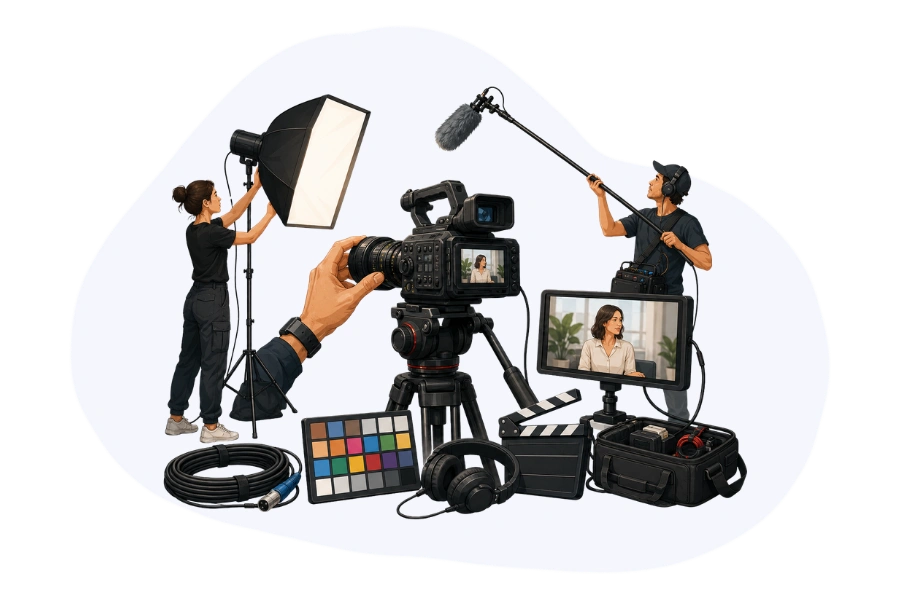
Most viewers may not notice every technical detail in a brand video. But they can feel the difference. They may not say, “The lighting is balanced,” or “The audio mix is clean,” but they will immediately sense whether the video feels professional, credible, and easy to watch. This is why small behind-the-scenes details matter so much, as it involves following:
- Lighting is one of the first things that shapes how a video feels.
- Audio is often underestimated, but poor sound quickly makes a video difficult to watch.
- How something is framed affects how the audience reads it. Good framing helps guide the viewer’s attention without making them think about it.
- A good director helps people relax, repeat lines naturally, adjust body language, and speak in a way that feels more real.
- The background also plays a role in how professional the video feels.
- Continuity between shots, i.e., the object position, lighting consistency, screen visuals, expressions, body language, etc., should be kept in continuity so that the final edit is smooth and believable.
What Happens in Post-Production?
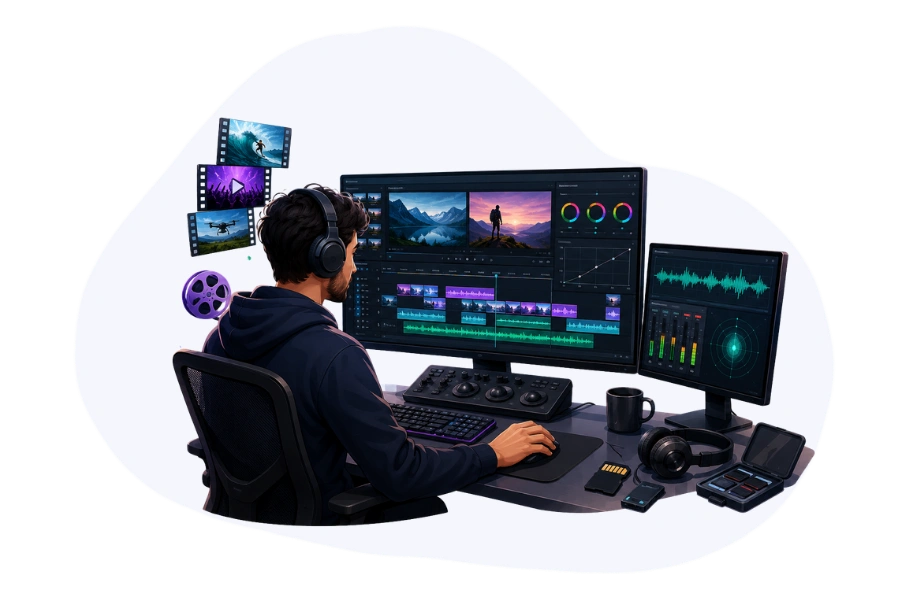
Once filming is done, the editing begins. Post-production is where everything is put together, refined, and until the video structure feels complete.
It starts with sorting all the footage and selecting the best takes. Editors focus on the structure, deciding scene flow, and how the story unfolds.
A few key parts of this stage include:
- Editing: Selecting the best footage and arranging clips so the video feels smooth and easy to follow
- Sound work: audio, balancing levels, and adding background music
- Color adjustments: Making sure everything looks consistent and visually appealing.
- Motion graphics, captions, and final formatting: These elements help explain ideas more quickly, making them more accessible and easier to follow, especially when the video includes services, features, processes, or statistics.
This stage often takes longer as small details make a big difference. A slight change in pacing or music can completely shift how the video feels.
What Is Included in the Final Video Delivery?
Finally, the stage where the finished video is prepared for actual use. This may sound simple, but it is important because a brand video usually has to work across different platforms and business needs.
For example, a business may need a full version for the website or YouTube, a shorter version for LinkedIn or Instagram, a vertical version for Reels or Shorts, or an optimized version for ads.
Now, each version may require small changes in framing, captions, pacing, format, or duration. This is why final delivery is not just about exporting the video. It is about making sure the video is ready to perform wherever it will be used. That is when the production process truly pays off.
The final video may be the visible result, but post-production and delivery decide how polished, usable, and effective that result becomes.
What Separates Forgettable Brand Videos From Effective Ones
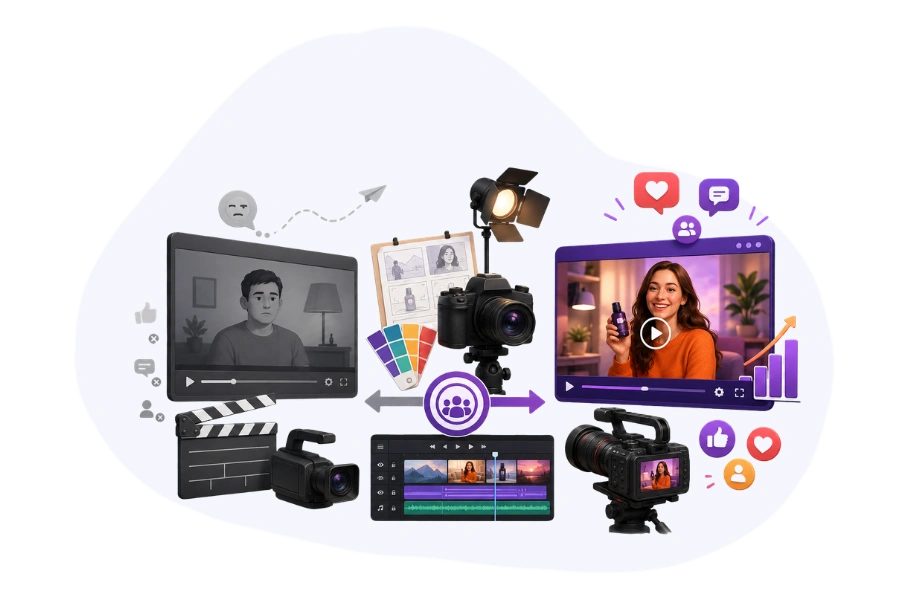
Once the video is live, the focus shifts to how it performs. This part is critical, where you learn what worked and what didn’t.
It’s easy to focus on views, but they don’t tell the full story. A video can get a lot of views but still be ineffective if people don’t engage with it.
This is where the difference between a forgettable video and an effective one becomes visible.
A forgettable brand video usually focuses too much on showing the company and too little on communicating why the audience should care. While an effective brand video does the opposite. It has a clear purpose. It understands who it is speaking to. It keeps the message simple. It uses visuals to support the story instead of filling space. It creates a feeling that matches the brand. And most importantly, it leaves the viewer with something to remember.
A good video should not make the audience think, “This looks nice.” It should make them think, “This brand understands what it wants to say.”
Why Businesses Are Investing More in Professional Brand Video Production
Businesses invest in professional brand video production because video has become one of the most practical ways to build trust, explain value, and create a stronger first impression. A well-made video can simplify content, build trust, and keep people on your website longer. It also performs better on Instagram, LinkedIn, and YouTube.
This is why many businesses now invest in brand video production services to connect faster with their audience. It has become a core part of how they communicate, market, and stay relevant.
A skilled brand video production agency understands that quality comes from strategy, not just equipment. The difference comes through clarity and intent. A lot of videos fail to connect as they try to say too much or don’t really speak to a specific audience.
Things that set them apart:
- They stick to one idea: Instead of cramming in multiple messages, they focus on one clear takeaway.
- They feel relevant: The tone and style match the audience they’re trying to reach.
- They follow a natural flow: There’s a beginning, middle, and end that makes sense.
- They don’t distract: Clean audio, steady visuals, and smooth edits keep attention where it should be.
When all of this comes together, the video feels simple, and that simplicity is intentional.
Final Thoughts
Creating a strong brand video isn’t just about filming something that looks good. It’s about making something that communicates clearly and connects with the right audience.
From planning and scripting to filming and editing, every stage plays a role in shaping the final outcome. While video might feel simple, getting there usually isn’t. It takes coordination, revisions, and understanding what the video is meant to deliver.
For businesses, this is where professional production makes a difference. It’s not just about better visuals; it’s about making sure the message conveyed appeals to the audience to achieve set results.
You could be working with a brand video production company or exploring dedicated video production services. Businesses that invest in thoughtful video creation often see stronger engagement. When things come together, a brand video becomes more than just content. It becomes something people remember, engage with, and act on, which is ultimately what makes it valuable.
At MediaSolz, we assist brands by either partnering with them or offering dedicated post-production services. If you want the behind-the-scenes footage to be as polished as the final video, we can help you transform all that chaos into a video masterpiece. Let’s connect and ensure a smooth behind-the-scenes experience for your next brand video.
Read More: https://mediasolz.com/blog/
Frequently Asked Questions
What are the key stages involved in creating a high-quality brand video?
The process includes strategy development, scripting, storyboarding, pre-production planning, filming, editing, sound design, color grading, revisions, and final distribution to ensure the video effectively communicates the brand’s message.
How does pre-production planning impact the success of a brand video?
Pre-production creates a clear roadmap for filming by organizing scripts, locations, schedules, and resources. Strong planning minimizes errors, improves efficiency, and ensures the final video aligns with business goals.
How important is scripting and storyboarding in video creation?
Scripting and storyboarding provide structure and direction. They ensure messaging stays clear, scenes flow smoothly, and every visual supports the story, making production more organized and the final video more impactful.
What are the best practices for filming and editing a brand video?
Use proper lighting, clear audio, stable camera work, and multiple takes during filming. During editing, focus on pacing, seamless transitions, color correction, and consistent branding for professional results.
How does post-production enhance the quality of brand video?
Post-production refines raw footage through editing, sound enhancement, color grading, motion graphics, and visual adjustments. It transforms recorded content into a polished, engaging video that strengthens audience impact.