The creative economy is evolving at a pace few could have predicted. In just a few years, AI-generated video has moved from novelty to a mainstream production tool. Independent creators use it to test ideas. Startups rely on it for explainers. Large brands experiment with it to scale campaigns across markets.
But as adoption grows, so do questions on security. Is AI-generated video actually safe to use? Who owns it? Can you be sued for publishing it? What happens if it imitates a real person or uses protected material without your knowledge?
For creators, marketers, and agencies, these are not theoretical concerns. They are real legal and reputational risks that can affect revenue, partnerships, and brand trust.
This blog breaks down what you need to know before you create AI video projects and publish them online.
The Rapid Adoption of AI in Video Production
Not long ago, professional-quality video required cameras, lighting setups, editing suites, and post-production specialists. Today, an AI video creator can generate scripts, voices, avatars, background music, and motion graphics within minutes. This results in:
- Faster turnaround
- Lower production costs
- Minimal technical expertise required
- Scalable content output
Many businesses now use AI video creation tools for social media ads, training modules, product demos, and internal communication. Even traditional video production services are integrating automation into their workflows.
Yet speed should never replace due diligence. Every time you create AI video content, you operate within a legal ecosystem that was not originally designed for machine-assisted creativity
The Legal Risk in AI-Generated Videos
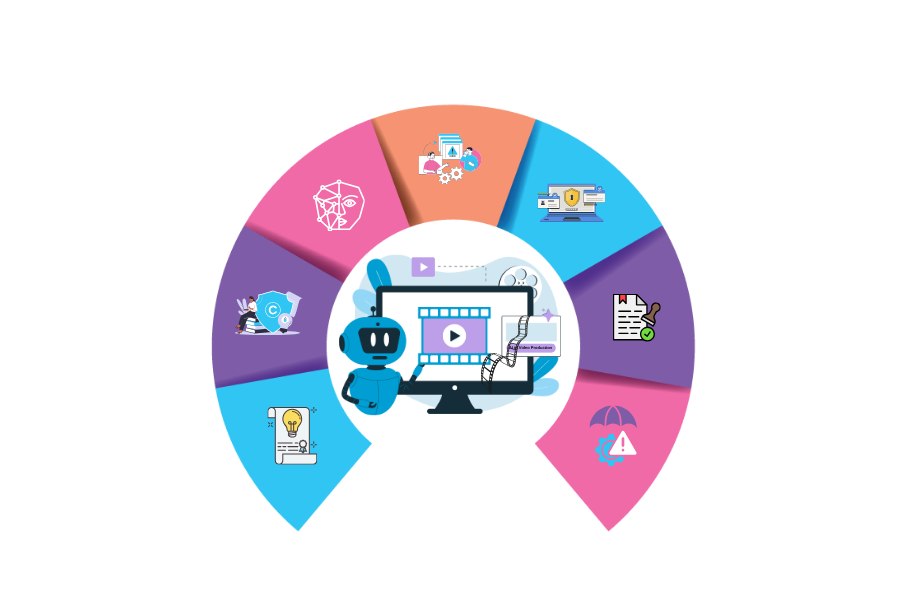
1. Copyright Ownership and Authorship Uncertainty
Ownership is the first major grey area. In most jurisdictions, copyright law protects works created by human authors. The complication with AI-generated video content is determining authorship. If a machine produces visuals, voiceovers, and scripts based on prompts, who owns the final output?
Possibilities include:
- The person who wrote the prompt
- The platform providing the AI video creator
- No one, if courts determine there is no human authorship
Different countries are handling this differently. Some recognize ownership when substantial human input is present. Others remain undecided. For creators, this means you should:
- Review platform terms carefully.
- Confirm whether commercial rights are granted.
- Document your creative input process.
If you rely solely on automation with minimal modification, claiming exclusive ownership could become legally complex.
2.Training Data and Copyright Infringement Risks
Another concern tied to AI-generated video is the source of its training data. Many AI systems are trained on vast datasets scraped from the internet. These may include copyrighted scripts, performances, music, or visuals.
If your output resembles an existing work too closely, you could face:
- Copyright infringement claims
- Takedown notices
- Monetization bans
- Lawsuits
This risk increases when users intentionally prompt the tool to mimic a known filmmaker, brand voice, or actor.
For example, asking an AI video creator to “produce a commercial in the style of a famous director” may generate visuals that feel derivative. While inspiration is common in art, legal boundaries matter.
Established video production company teams typically run content checks and legal reviews before publishing major campaigns. Independent creators should adopt a similar discipline.
3. DeepFakes and Personality Rights
One of the most controversial uses of AI-generated video involves synthetic likenesses. Deepfake technology can replicate real people’s faces, voices, and expressions with alarming accuracy.
This creates a separate legal category: personality rights, sometimes called publicity rights.
Using someone’s:
- Face
- Voice
- Name
- Distinctive identity
Without permission can lead to legal consequences, even if the content is fictional.
Creators who create AI video materials that resemble public figures must exercise extreme caution. Even satire has legal limits when it damages reputation or implies endorsement.
Brands investing in corporate video production cannot afford reputational harm from unauthorized likeness use. What might look like an efficient shortcut can escalate into litigation.
4. Misinformation and Platform Liability
Publishing AI-generated video content carries reputational responsibility. If the content spreads misinformation, impersonates someone, or manipulates events, platforms may remove it. In some cases, regulators may intervene.
Emerging regulations across multiple countries now address:
- Synthetic media disclosure requirements
- Political content restrictions
- Manipulated news penalties
Creators must verify factual claims, even when automation generates them. Delegating scriptwriting to an AI video creator does not remove liability.
Professional video production agency teams increasingly include compliance checks within their workflows. Solo creators should implement their own verification systems.
5. Data Privacy and Confidential Information
Many businesses use AI-generated video for internal training or client presentations. However, uploading sensitive information into external AI systems introduces data security risks.
Before you create AI video projects using:
- Client names
- Financial figures
- Internal processes
- Private communications
Confirm that the platform complies with data protection laws and does not reuse your inputs for future training.
Companies that traditionally relied on controlled video production services often underestimate this risk when switching to automated systems.
Confidentiality clauses in client contracts may be breached unintentionally.
6. Commercial Use and Licensing Restrictions
Not every AI video creator allows unrestricted commercial use. Some platforms differentiate between:
- Personal use
- Monetized content
- Enterprise licensing
Failing to review licensing terms can result in retroactive payment demands or legal notices.
Businesses investing in corporate video production through automation must clarify whether enterprise rights apply.
A reputable video production company will typically provide written documentation of usage rights. When using automated tools, you are responsible for confirming these rights yourself.
7. Insurance and Risk Mitigation
Traditional media projects often carry production insurance. With AI-generated video, creators rarely think about coverage.
However, errors and omissions (E&O) insurance may protect against claims involving:
- Copyright infringement
- Defamation
- Misrepresentation
Agencies providing hybrid video production services increasingly seek insurance coverage that includes AI-related risks.
If you operate a video production agency integrating automation, updating your insurance policy is prudent.
Practical Guidelines for Safe AI Video Creation
To minimize exposure when working with AI-generated video, follow these principles:
- Maintain meaningful human oversight.
- Avoid prompts that explicitly mimic identifiable creators.
- Verify all factual claims manually.
- Secure written licenses for commercial distribution.
- Avoid unauthorized likeness replication.
- Store documentation of creative processes.
- Consult legal counsel for large campaigns.
When you create AI video assets responsibly, the technology becomes a productivity enhancer rather than a liability source.
Final Verdict: Is AI-Generated Video Safe?
It totally depends on how you utilize it! AI-generated video is not inherently dangerous. The risks emerge when creators:
- Ignore licensing terms
- Replicate protected material
- Use real likenesses without consent
- Publish unverified claims
- Overlook data security
Used responsibly, AI video creation tools can democratize storytelling and accelerate production cycles. Used carelessly, they can invite legal and reputational consequences. Creators who treat automation as a professional instrument, rather than a shortcut, are far more likely to succeed sustainably.
To Conclude
AI-generated video offers speed and scale, but it carries legal responsibilities. Hence, copyright ownership, licensing terms, and data privacy must be reviewed before you create AI video projects for commercial use.
Safe AI video creation requires human oversight, clear documentation, and compliance checks, especially in corporate video production. A reliable video production company or experienced video production agency like Mediasolz can integrate AI-generated video content into structured video production services without exposing your brand to avoidable risk.
Mediasolz combines advanced AI video creator capabilities with professional governance, ensuring your AI-generated video strategy remains innovative, compliant, and brand-safe. Wondering how you can scale your video production backed by AI and modern tech? Connect with us now, so that you can work to cater to what the world is waiting for. Click here to connect!
Frequently Asked Question
What are the main legal risks of using AI-generated videos?
Some of the major legal risks of using AI-generated videos can be:
- Copyright Infringement and Ownership (IP) Issues,
- Deepfakes, Personality Rights and Defamation
- Privacy and Data Protection Violations
- Regulatory Compliance and Mandatory Labelling
- Contractual Violations
How can creators avoid legal issues when using AI video tools?
Creators can avoid legal issues when using AI video tools by ensuring that they involve significant human contribution, have proper licenses for inputs, and avoid creating any defamatory content. Also, ensure there is no privacy violation, defamation, or copyright infringement.